
Vietnamese Numbers 0–99: Rules & Exceptions
Vietnamese numbers follow a logical pattern, but there are a few exceptions that trip up beginners. Here is everything you need to count confidently from 0 to 99.
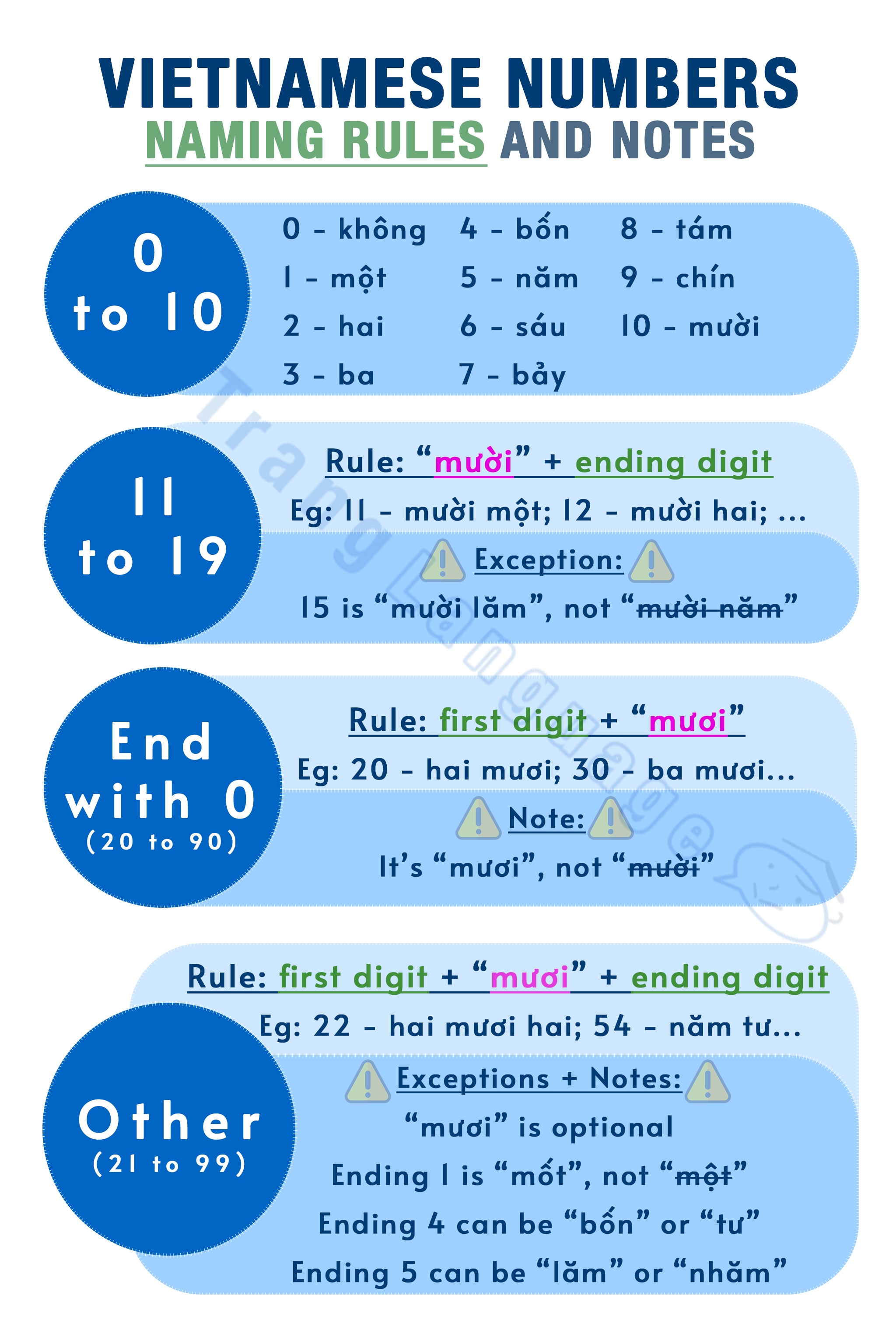
The digits: 0 to 9
0khôngkhong
1mộtmot
2haihai
3baba
4bốnbon
5nămnam
6sáusau
7bảybay
8támtam
9chínchin
The tens rule: mươi
For multiples of ten, place the tens digit before mươi. The only exception is 10 itself, which is mười (with a falling tone).
| Number | Vietnamese | How it works |
|---|---|---|
| 10 | mười | Note the different tone on mười vs mươi |
| 20 | hai mươi | hai (2) + mươi |
| 30 | ba mươi | ba (3) + mươi |
| 40 | bốn mươi | bốn (4) + mươi |
| 50 | năm mươi | năm (5) + mươi |
| 99 | chín mươi chín | chín (9) + mươi + chín (9) |
Above 20: The 3 exceptions to know
| Rule | When it applies | Example |
|---|---|---|
| lăm / nhăm not năm | When 5 is in the units place of a two-digit number | 15 = mười lăm · 55 = năm mươi lăm |
| mốt not một | When 1 is in the units place after mươi (20–90) | 21 = hai mươi mốt · 31 = ba mươi mốt |
| tư = bốn | An alternate word for ending 4 | 44 = bốn mươi bốn or bốn mươi tư (both are used) |
Common mistake: Many learners say mười năm for 15, but native speakers say mười lăm. Additionally, 15 can only take lăm and be mười lăm, unlike 25, 35... 95 that can take either lăm or nhăm.
Want to practise counting and using numbers in real conversations with a certified native teacher?
Book a free trial lesson →
Book a free trial lesson →


